KDCube
From complex infrastructure to a clear reason to try it.
- Positioning sprint
- Founder interviews
- Competitive research
- Homepage & README
- Thought leadership
A four-week positioning sprint for an open-source AI agent runtime, carried into the homepage, the README and the CTO's first published writing.
The problem
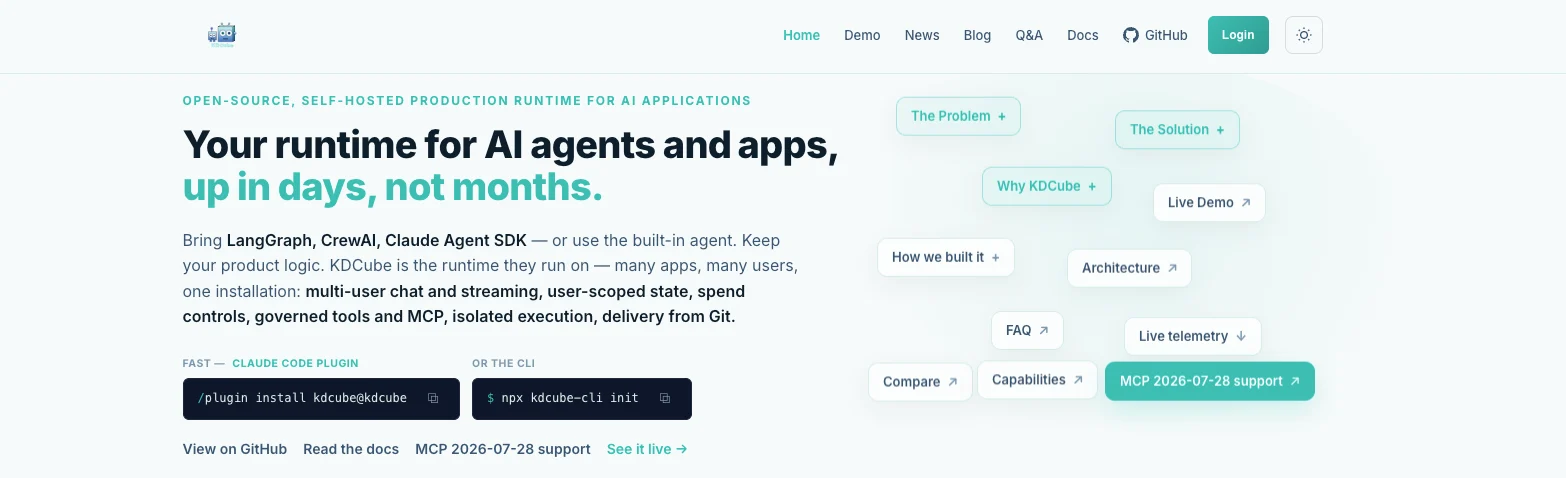
Three technical founders had built an open-source runtime for putting AI agents into production. The engineering was substantial: tenant isolation, security, resource management. But the homepage called KDCube “a runtime for AI mini-apps,” and nothing explained why developers already building on their own frameworks needed it.
Positioning is about decisions. It means finding the customer truth and looking hard at the problem your product was built to solve. The investor narrative is another thing entirely – and at KDCube, the two had become tangled.
What we did
Found the decision that mattered
We ran a four-week positioning sprint, combining founder interviews with research into how developers talk about running agents, across Reddit threads and US search data.
The first half of the sprint went on “agentic portals,” which two of the founders were set on. It was too broad, and it named no problem or pain.
There was no existing category narrative or search traffic behind it either. Searching the term turned up developer portals and HR tech. In the Reddit threads, “agentic” and “portal” came up zero times, while cost and spend came up 27 times.
What settled it was the product's own history. Elena Viter, the CTO who built it, confirmed that production was the problem KDCube was made to solve: “We started from runtime.” The framework came later.
So we positioned KDCube for developers shipping agents to their own customers, underneath the frameworks they already use. Agentic portals became the investor story, with the conditions it has to meet before it can lead.
Turned the strategy into a shared story
We wrote a positioning playbook, a shared reference for product claims, a positioning deck, and rewrites of the homepage and README.
The playbook split the language into three layers: developer pain vocabulary for the homepage and README, category terms like “AI agent infrastructure” for search, and LangGraph comparisons for community content.
Technical capabilities such as tenant isolation, security and resource management became reasons to choose the product.
The new homepage went live the same day the framework-or-runtime question was settled.
Took the thinking into the market
The same strategy shaped technical thought leadership. During the sprint, we wrote a three-part dev.to series with Elena Viter, KDCube's CTO.
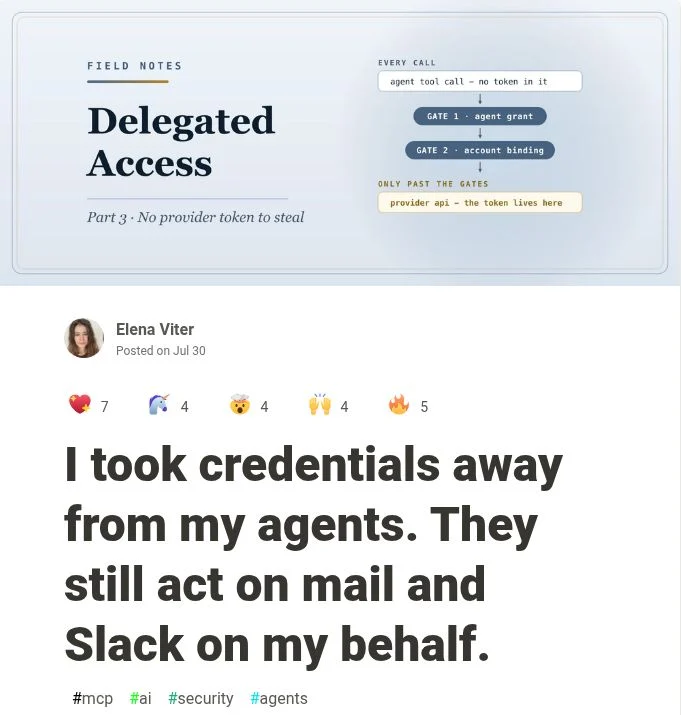
The posts covered dropping tool calling for more reliable agents on a cheaper model, stopping runaway agent spend before a turn runs, and letting agents act without holding credentials.
We coached her on writing hooks. It was the first time she had put her writing out there.
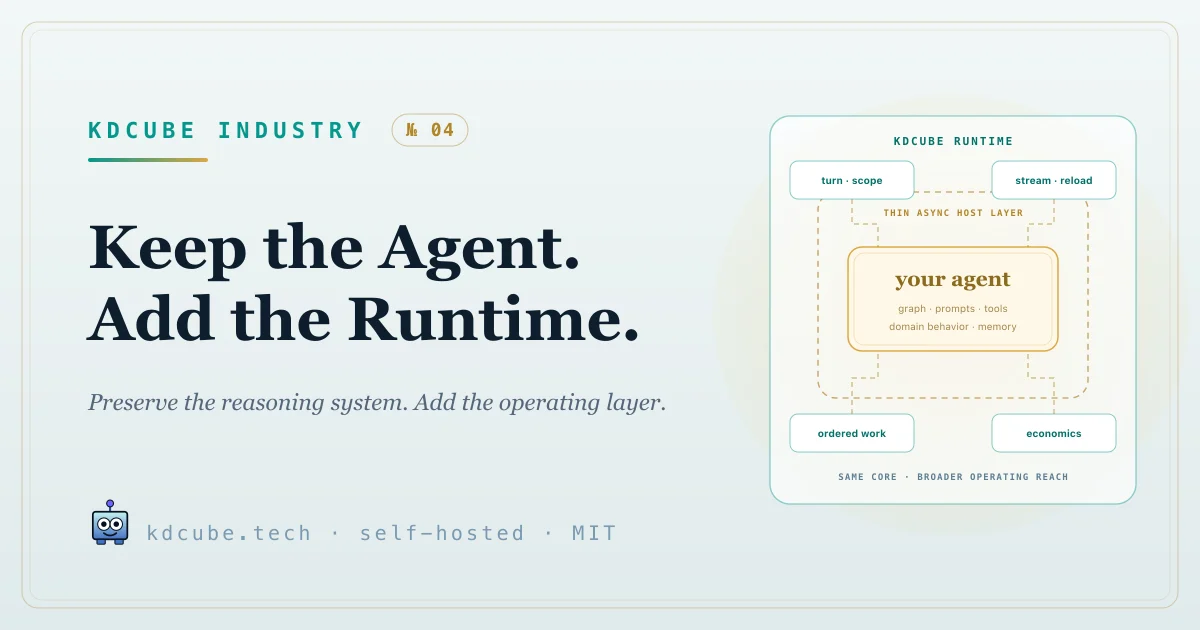
The founders now carry the position into their own writing: “Keep the Agent. Add the Runtime.”
The value
A shared developer proposition and a foundation for consistent, credible technical thought leadership.
BeforeA runtime for AI mini-apps.
AfterAdd KDCube and get the production layer your framework leaves out, already built.
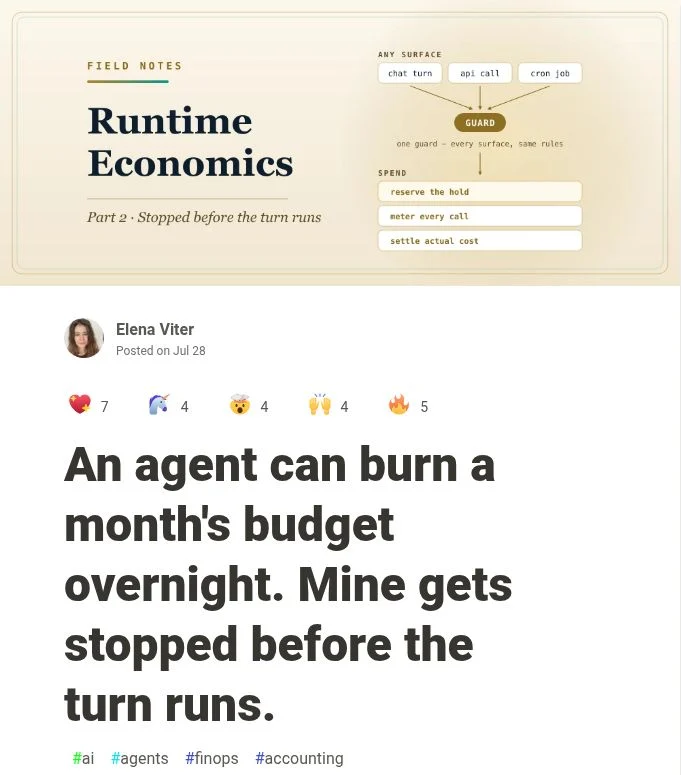
An agent can burn a month's budget overnight. Mine gets stopped before the turn runs.
Part 2 of the three-part series we wrote with Elena Viter, KDCube's CTO, during the sprint. The series was her first published writing.
Where the work appeared

More case studies
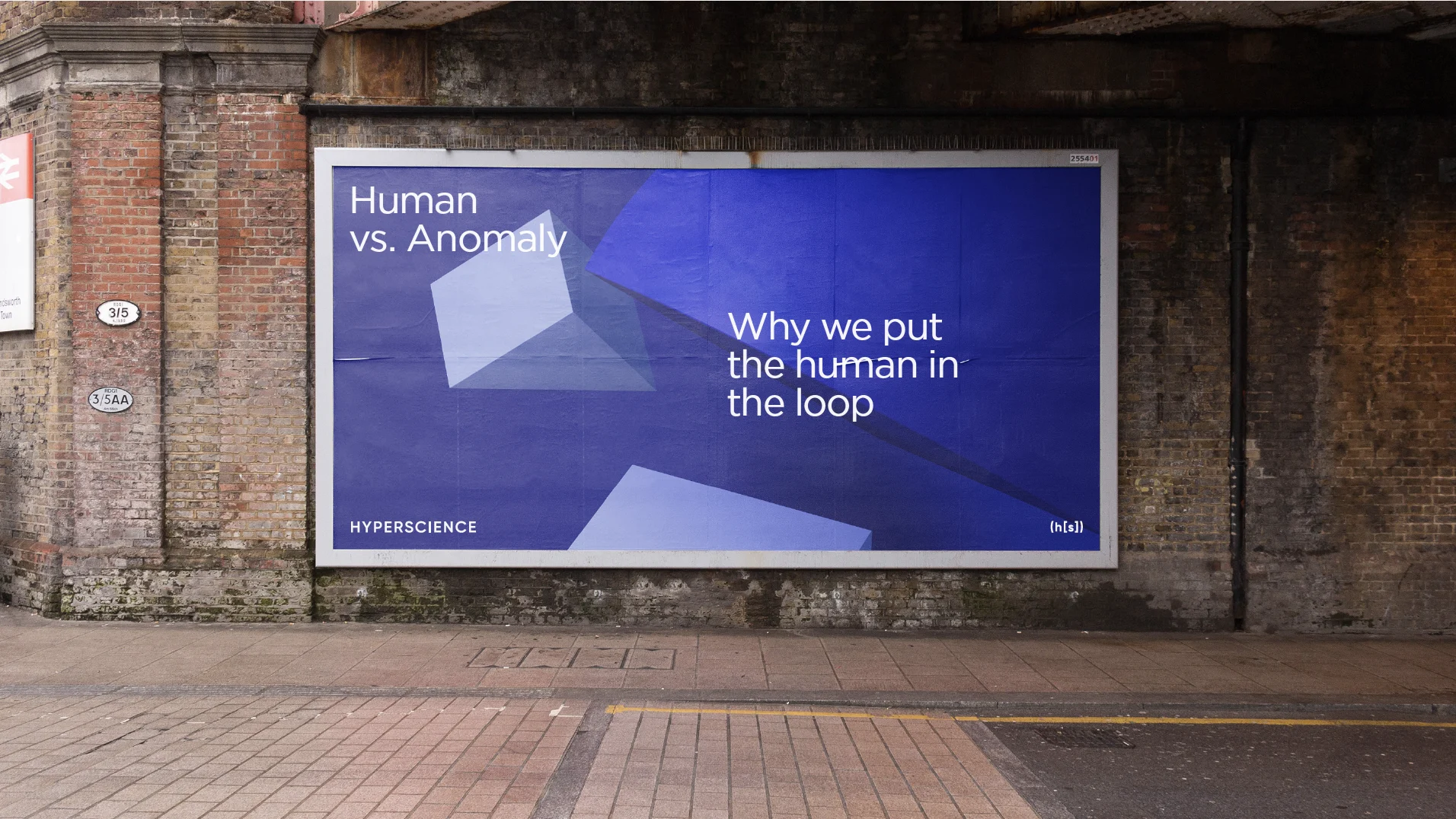 Hyperscience
Complex AI with a distinctive human voice.
A sharper category proposition, a human-centered narrative and a consistent voice for the wider brand.
For CMOs
Read the case study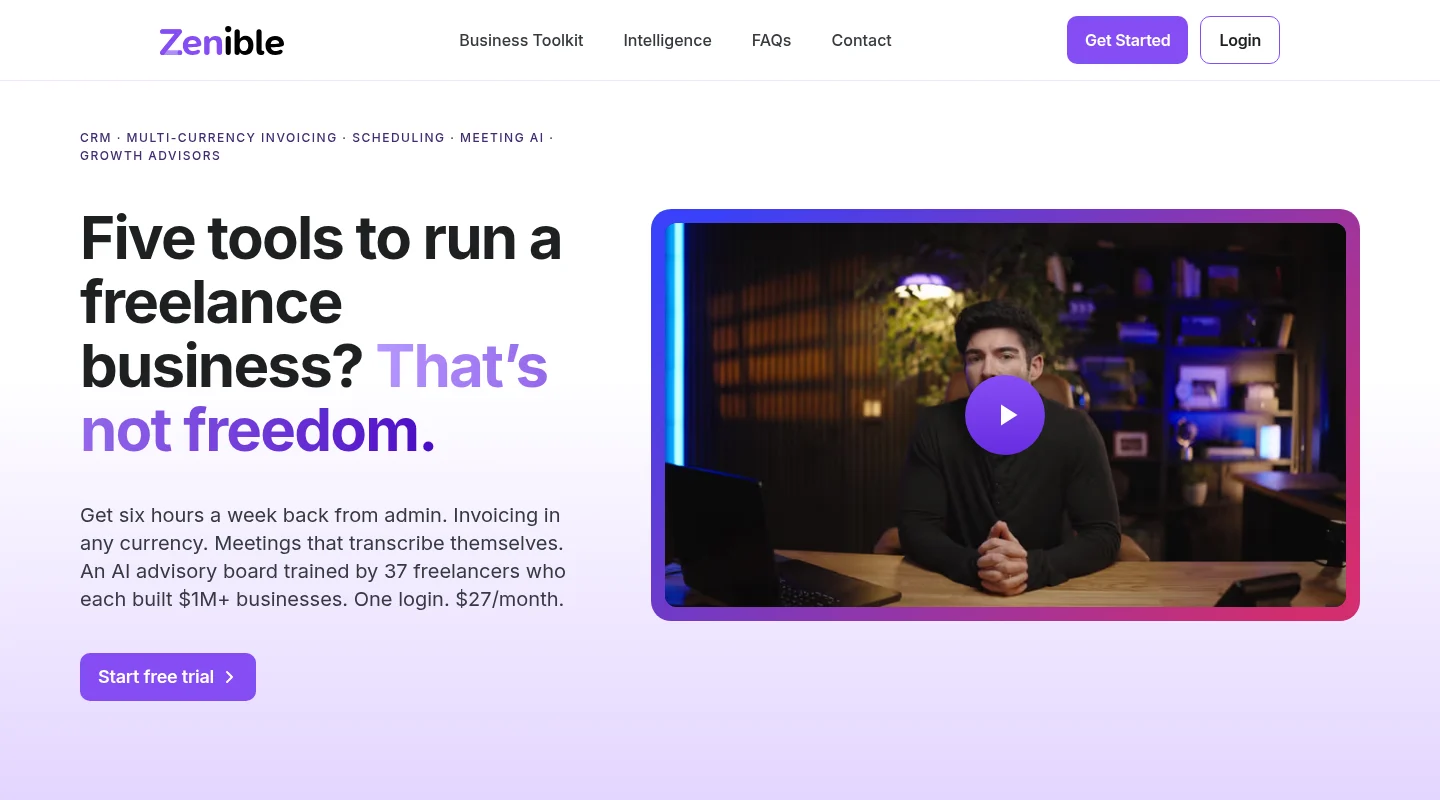 Zenible
A technical founder’s product, to a coherent market story.
Product positioning carried through to the homepage and ads.
For Founders
Read the case study- A distinctive position adopted in leadership discussions and developed into practical sales material.B2B revenue consultancy
A position that stands up to the competition.
For CMOs and Founders
Read the case study
Find the position only you can own.
Book a free 30-minute Positioning Discovery call. We'll look at how you describe the product today, who it's really for and where the story loses buyers. You'll leave the call understanding your business, and how your buyers see it, more clearly.